
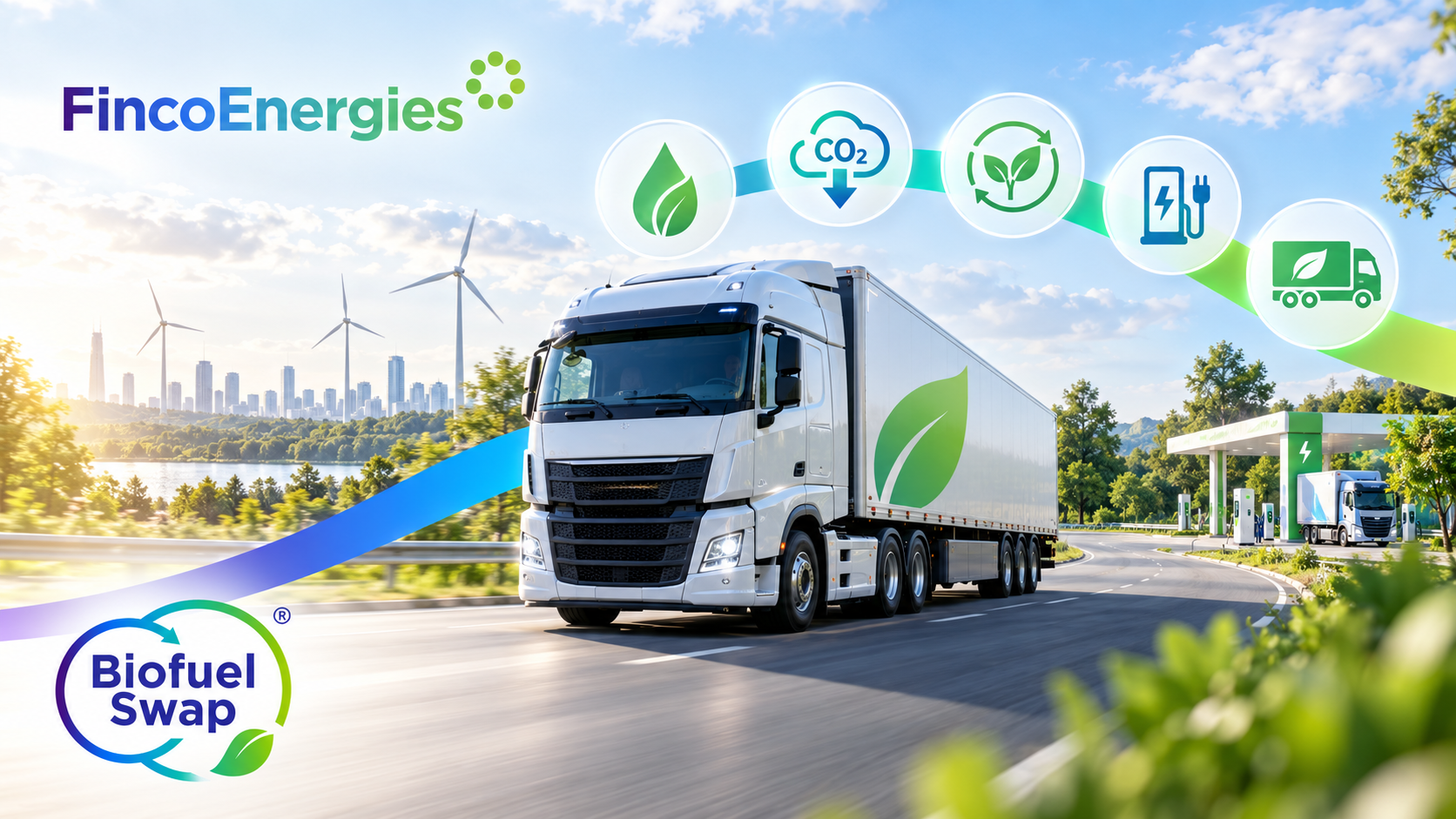
HVO can reduce road transport emissions today — but sustainable supply is the key constraint
Hydrotreated Vegetable Oil (HVO) has become one of the most practical options for reducing greenhouse gas emissions from existing diesel road transport.
Its main attraction is straightforward: many diesel trucks and vehicles can use HVO without replacing the engine or fundamentally changing existing refuelling operations. Depending on the feedstock and production pathway, HVO100 can deliver substantially lower lifecycle greenhouse gas emissions than fossil diesel.
That gives transport operators an opportunity to reduce emissions from vehicles already on the road while battery-electric and other zero-emission technologies continue to scale.
However, HVO has an important limitation: sustainable HVO feedstock is not unlimited.
Used cooking oil, animal fats and other waste and residue materials are increasingly sought after by road transport, aviation, maritime transport and renewable fuel compliance markets at the same time. As demand grows, access to sustainable feedstocks could become more important than HVO production capacity itself.
The result is that HVO is likely to play an important role in road transport decarbonisation, but it is unlikely to replace fossil diesel across the entire road transport sector.
What is HVO?
HVO stands for Hydrotreated Vegetable Oil. It is a renewable paraffinic diesel produced by hydrotreating oils and fats.
Potential feedstocks include:
- used cooking oil;
- animal fats;
- agricultural and forestry residues;
- waste and residue oils;
- certain renewable raw materials.
HVO100 refers to fuel consisting entirely of HVO rather than a blend with fossil diesel.
Unlike conventional biodiesel, HVO has chemical properties that are much closer to fossil diesel. Many diesel engines are therefore able to use HVO as a drop-in fuel, provided the vehicle manufacturer has approved the fuel specification.
BMW Group, for example, states that its diesel engines produced since March 2015 in specified models are approved for HVO100 according to the European EN 15940 fuel standard. BMW has also been using HVO100 for the initial filling of diesel vehicles manufactured in Germany since January 2025.
What are the main benefits of HVO for road transport?
1. HVO can reduce emissions from the existing diesel fleet
One of HVO’s biggest advantages is that emissions reductions do not have to wait for the entire vehicle fleet to be replaced.
BMW states that HVO100 has the potential to reduce CO₂e emissions by around 90% compared with fossil-based diesel. The actual lifecycle reduction depends on factors including feedstock, production pathway and supply chain.
This is particularly relevant for commercial road transport.
Heavy-duty trucks can remain operational for many years. Even if sales of battery-electric trucks accelerate rapidly, a substantial diesel fleet will continue operating during the transition.
Using sustainable HVO in compatible vehicles can therefore reduce emissions from assets already on the road.
2. HVO requires relatively little operational change
Electrification can require significant changes to transport operations, including:
- charging infrastructure;
- grid connections;
- depot upgrades;
- charging schedules;
- route planning;
- vehicle utilisation strategies.
Hydrogen likewise requires a new production, distribution and refuelling ecosystem.
HVO can often use existing diesel vehicles and familiar liquid-fuel infrastructure. This makes it particularly attractive for transport operators looking for a near-term emissions reduction without having to redesign their entire operation.
Smart Freight Centre’s discussion with Procter & Gamble illustrates this point. P&G identifies biofuels alongside electrification as an important part of its freight decarbonisation strategy. Because biofuels such as HVO can be used in existing equipment, they provide an accessible option for shippers that cannot wait for full fleet electrification.
3. HVO can help decarbonise harder-to-electrify routes
Not every transport operation can be electrified at the same speed. Range, payload, charging infrastructure, vehicle utilisation and operating costs can all influence which drivetrain works best for a particular fleet.
Volvo Trucks consequently argues that alternative technologies should not necessarily be viewed as competitors. Battery-electric vehicles, combustion engines running on renewable fuels and hydrogen-based solutions can complement each other depending on the transport application.
For some operators, that could mean:
- Battery-electric trucks for routes where charging and vehicle range are suitable.
- HVO for existing diesel trucks or routes where rapid electrification is difficult.
- Biomethane or other renewable fuels where suitable infrastructure and vehicles are available.
- Hydrogen potentially for specific heavy-duty applications as technology and infrastructure develop.
Rather than one technology replacing diesel everywhere, road transport is increasingly moving towards a multi-energy decarbonisation strategy.
Is HVO a replacement for electric trucks?
Not necessarily.
HVO and electric trucks solve different parts of the decarbonisation challenge.
Battery-electric vehicles can eliminate tailpipe CO₂ emissions and can deliver very large lifecycle emissions reductions when charged with low-carbon electricity. For suitable transport operations, electrification is therefore likely to become increasingly important.
HVO’s advantage is different: it can reduce the lifecycle emissions of existing combustion-engine vehicles. That makes HVO particularly valuable during the transition period and in applications where electrification is not yet practical.
Volvo’s research with transport buyers shows this portfolio approach already being used. One buyer described using electric trucks for city-centre deliveries, biomethane/LNG on regional and long-haul corridors, and HVO as a drop-in fuel to achieve immediate emissions reductions on other routes.
The relevant question is therefore often not “HVO or electric?”, but:
Which low-carbon technology creates the greatest emissions reduction for this particular transport operation?
The main limitation of HVO: sustainable feedstock availability
The biggest structural challenge facing HVO is not necessarily vehicle compatibility or refining technology.
It is feedstock availability.
European HVO production increasingly depends on waste oils, animal fats and other sustainable residues.
Fastmarkets reported in June 2026 that only around 9% of European HVO feedstocks originated from crops, while approximately 36% came from Annex IX feedstocks and another 33% from other sustainable wastes and residues.
These waste streams have an important characteristic: their supply cannot easily respond to higher HVO prices. Used cooking oil availability, for example, depends largely on how much cooking oil is consumed and successfully collected.
Tallow availability is linked primarily to livestock and meat production rather than demand from biofuel producers.
Fastmarkets therefore describes much of the feedstock base supporting European HVO production as relatively inelastic.
In practical terms:
Building more HVO plants does not automatically create more sustainable waste feedstock.
That distinction will become increasingly important as renewable fuel demand grows.
Is there enough HVO available in Europe?
HVO availability is increasing, but it varies substantially between countries and transport corridors.
BMW Group reported in July 2026 that there were already more than 8,300 HVO100 filling stations across Europe. The company also notes that HVO100 has been available in several EU countries for years and has been permitted for general sale at German filling stations since May 2024.
This demonstrates that HVO has moved far beyond small-scale trials.
However, the number of filling stations does not by itself demonstrate that sufficient sustainable HVO exists to replace Europe’s fossil diesel consumption.
Availability depends on:
- sustainable feedstock supply;
- local refining capacity;
- fuel imports;
- national taxation;
- renewable transport obligations;
- distribution infrastructure;
- competing demand from other sectors.
A fleet operating internationally should therefore assess HVO availability by country and transport corridor, rather than assuming uniform European supply.
What does HVO mean for transport buyers and Scope 3 emissions?
The commercial case for HVO increasingly extends beyond the transport operator.
Companies buying freight services are under growing pressure to reduce and report emissions across their supply chains.
Volvo Trucks’ interviews with transport buyers show that sustainability criteria are increasingly being incorporated into procurement and supplier evaluation. Buyers are looking for transport providers that can demonstrate measurable emissions reductions and provide verified sustainability information for Scope 1–3 reporting.
That changes the economics of HVO.
A carrier may face a higher fuel cost than with fossil diesel, but the customer may be willing to pay for the corresponding emissions reduction as part of a lower-carbon logistics service.
HVO can therefore become not just a fuel choice, but a decarbonisation product offered to freight customers.
Book and Claim and mass balance could expand access to HVO
Physical HVO does not always have to be consumed on the exact transport lane of the company claiming the associated emissions benefit.
This is where mechanisms such as Book and Claim and mass balance are becoming increasingly relevant.
Smart Freight Centre highlights Procter & Gamble’s use of Book and Claim as a way of scaling biofuel adoption. Under this model, carriers can use biofuel where its physical deployment is most efficient while the environmental attributes are allocated to the participating freight customer according to an established accounting framework.
P&G has developed procedures covering feedstock policy, governance, reporting methodology and verification for this approach. Smart Freight Centre emphasises transparency, auditability and clear methodologies as important principles for credible implementation.
Similar models are already being used in the logistics industry.
IRU describes CEVA Logistics’ European mass-balance service, launched in 2025, which enables customers to support biofuel use and allocate associated emissions reductions to transport activities. CEVA describes decarbonisation as a combination of measures including renewable fuels, electrification, multimodal transport, optimisation and digitalisation rather than a single technology switch.
These systems can make scarce renewable fuels more accessible to transport buyers, but credible accounting is critical to prevent double counting or double claiming of environmental benefits.
Does all HVO deliver the same CO₂ reduction?
No.
The climate performance of HVO depends strongly on:
- the feedstock;
- its origin;
- the fuel production pathway;
- processing energy;
- logistics;
- sustainability certification;
- the lifecycle accounting methodology used.
For that reason, statements such as “HVO reduces emissions by 90%” should not be interpreted as a universal value for every litre of HVO.
BMW, for example, describes an approximately 90% potential CO₂e reduction for HVO100 compared with fossil diesel. That is useful evidence of HVO’s potential, but the exact saving for an individual fuel supply should be calculated using the applicable lifecycle methodology and sustainability data.
For companies using HVO to meet corporate climate targets or reduce Scope 3 emissions, traceability and credible emissions accounting are therefore just as important as purchasing the fuel itself.
What is the future role of HVO in road transport?
HVO has a strong near- and medium-term role in road transport because it solves a problem that many other technologies cannot immediately solve:
How do we reduce emissions from diesel vehicles that already exist?
It can provide significant lifecycle greenhouse gas reductions, requires limited operational disruption and can help decarbonise routes that are currently difficult to electrify.
But those benefits do not make HVO infinitely scalable.
Sustainable feedstocks remain finite, regulatory demand is increasing and other transport sectors are competing for similar renewable resources.
The most realistic role for HVO is therefore likely to be targeted rather than universal. HVO can:
- reduce emissions from the existing diesel fleet;
- provide an interim solution while electric fleets and charging infrastructure scale;
- serve specific heavy-duty and difficult-to-electrify operations;
- support lower-carbon freight products and Scope 3 reduction programmes;
- complement rather than replace electrification and efficiency improvements.
The road transport transition is unlikely to have a single winner.
The strategies described by P&G, Volvo, BMW and CEVA all point towards a similar conclusion: decarbonisation requires a portfolio of solutions.
HVO can be a powerful part of that portfolio — provided businesses recognise both the emissions value and the physical scarcity of the sustainable feedstocks on which it depends.
Frequently asked questions about HVO
What does HVO stand for?
HVO stands for Hydrotreated Vegetable Oil. It is a paraffinic renewable diesel produced from oils and fats through a hydrotreatment process.
Can HVO be used in a normal diesel truck?
Many modern diesel trucks can use HVO100, but vehicle compatibility should always be confirmed with the vehicle or engine manufacturer. Compatible HVO normally meets the EN 15940 paraffinic diesel standard.
How much CO₂ does HVO save?
The reduction depends on the feedstock and lifecycle pathway. Some waste-based HVO pathways can achieve very substantial greenhouse gas savings compared with fossil diesel. BMW Group states that HVO100 has the potential to reduce CO₂e emissions by around 90%.
Is HVO better than an electric truck?
There is no universal answer. Battery-electric trucks can provide very low-emission transport where charging, range and payload requirements allow. HVO is particularly useful for reducing emissions from existing diesel vehicles and operations that cannot yet be easily electrified.
What is the biggest disadvantage of HVO?
The most important long-term limitation is the availability and cost of sustainable feedstock. European HVO production relies heavily on waste and residue materials whose supply cannot increase indefinitely in response to higher demand.
Will there be enough HVO to replace fossil diesel?
It is uncertain and different studies reach different conclusions about the potential renewable resource base. Current market evidence shows significant constraints around certain high-value waste feedstocks. For that reason, it would be risky to assume that HVO can simply replace all fossil diesel one-for-one across European road transport.
Sources and further reading
Smart Freight Centre — Procter & Gamble: Scaling Solutions for Freight Decarbonization
P&G’s approach to freight decarbonisation, including efficiency, electrification, biofuels, Book and Claim, governance and verification. Read the Smart Freight Centre article
BMW Group — HVO 100 for our diesels and the potential of renewable fuels in Europe
BMW’s use of HVO100, vehicle compatibility, reported emissions-reduction potential and European HVO infrastructure. Read the BMW Group article
Fastmarkets — European HVO markets: the feedstock constraint behind the compliance push
Analysis of European HVO feedstock availability, renewable fuel compliance demand, UCO, tallow and structural supply constraints. Read the Fastmarkets analysis
Volvo Trucks — How sustainability impacts transport buyers
Insights into transport procurement, Scope 3 reporting and the combined use of electric trucks, biomethane and HVO. Read the Volvo Trucks article
Volvo Trucks — Which alternative fuel is the future of trucks?
An overview of Volvo’s multi-technology approach to battery-electric trucks, renewable fuels and hydrogen. Read the Volvo Trucks article
IRU — Being agile is the name of the game: Decarbonising road transport
CEVA Logistics’ perspective on biofuels, mass balance, fleet decarbonisation, electrification and multimodal transport. Read the IRU article
